Figure AI's robot folded towels and made beds in 30 strangers' homes.
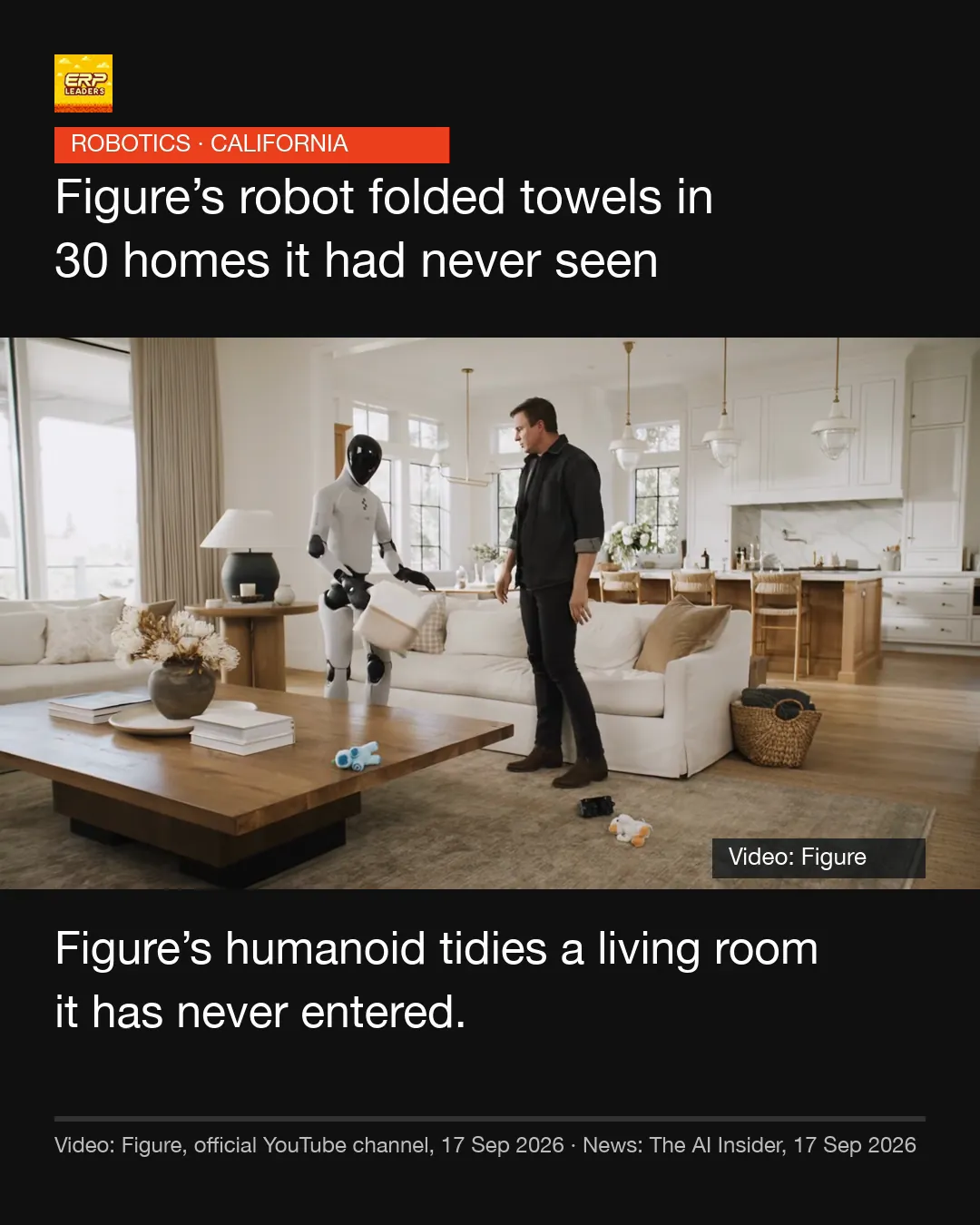
Figure said on 17 September that its Helix 2.5 model ran three jobs in 30 rented Bay Area homes. The jobs were clearing 13 to 15 toys from a living room, folding towels and making beds. No data was collected in the homes and no training happened on site.
The company says success rose from 9% to 56% after the model was pretrained on Index, its human behaviour dataset. It then needed half as much task-specific data to reach the same score.
These are Figure's own figures, shown in Figure's own demo film. The AI Insider published them on 17 September without independent testing. The robot was trained for the tasks elsewhere; the house, the towels and the toys were new to it.
Each attempt ran against a clock: one minute for the toys and three for the towels. If a human stepped in for safety, the run counted as a failure.
Whether that pays depends on who catches the misses. In these trials the robot failed nearly half its attempts. On a warehouse floor someone still has to catch the misses, and that handling cost sits against the labour saved.
🎥 Video: Figure, official YouTube channel, 17 Sep 2026.
Where in your operation would a 56% success rate be worth paying for?
What the captions say
- Figure's humanoid tidies a living room it has never entered.
- Figure says it rented 30 Bay Area homes for the test.
- Three jobs only, tidying rooms, folding towels, making beds.
- Every home is new to the robot, so are the objects.
- Success rose from 9% to 56%, the company says.
- The toys must be cleared inside one minute.
- Nearly half the runs still fail. Ask vendors for that number.