IBM lost $5 billion. Oreo's boss took over and refused a breakup.
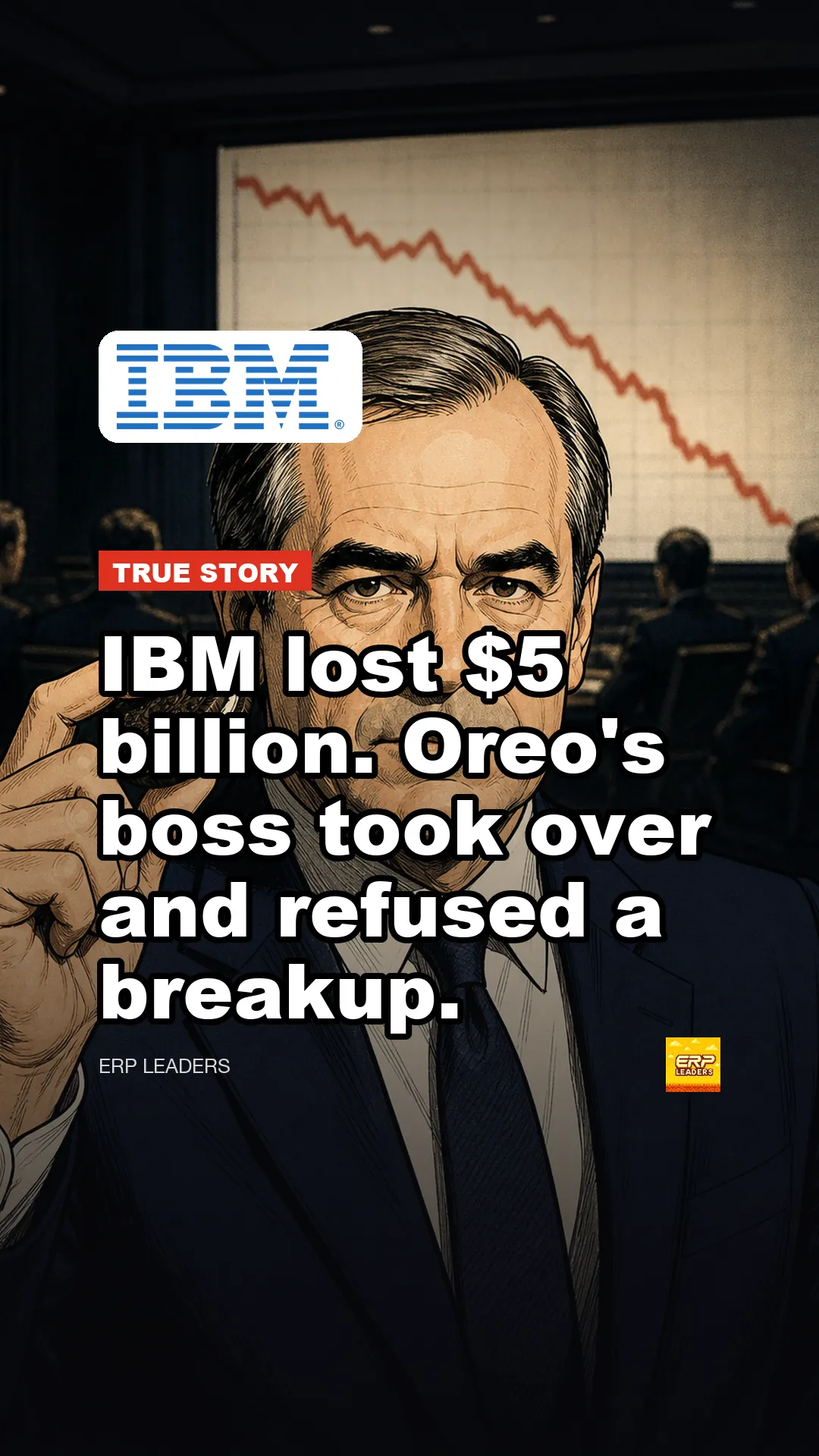
In 1992 IBM lost $4.97 billion. The Washington Post reported that no U.S. company had ever lost more in a single year. Chief executive John Akers had announced 25,000 more job cuts, and plans to split it into smaller companies, nicknamed the "Baby Blues", were well underway.
On April 1, 1993, IBM brought in its first outside chief executive, Lou Gerstner. He had run RJR Nabisco, the maker of Oreo. He had also been an IBM customer, and the break-up made no sense to him. In his first months he decided against the break-up, keeping one IBM that sold hardware, software, systems and services. "At the end of the day, in every industry, there's an integrator," he wrote in his book.
The cuts went on. In 1993 IBM lost $8 billion and ordered 35,000 more layoffs. By the time he retired in 2002, IBM's stock was more than 800% higher than when he took over.
Anyone who has run an ERP rollout with six vendors knows who does the integration when nobody owns it: the customer.
AI-generated illustration with narration by an AI voice.
IBM
What the captions say
- This is the story of how IBM lost nearly $5 billion in a year, then hired the man who ran Oreo's maker.
- That loss came in 1992. No American company had ever lost more money in a single year.
- Many of its workers had expected a job for life. In December 1992, chief executive John Akers announced 25,000 more job cuts.
- And inside, a plan was well under way to break the company into smaller businesses, nicknamed the Baby Blues.
- There was serious debate about whether it should even stay whole. Then, for the first time, it hired an outsider.
- On April 1, 1993, Lou Gerstner became IBM's chief executive. He had run RJR Nabisco, the maker of Oreo cookies.
- Early on, as IBM tells it, Gerstner stopped a long internal presentation. He said, simply: "Let's just talk."
- He had been an IBM customer. To a former customer, the break-up made no sense.
- IBM later wrote that he understood one thing. Clients wanted technology that worked together, not in pieces.
- In his first months, he made the call. IBM would stay one company, selling hardware, software, systems and services.
- In 1993, the company still lost $8 billion, and ordered 35,000 more layoffs.
- Gerstner retired in 2002. By then, IBM's stock was more than 800% higher than when he took over.
- He later called keeping IBM together the most important decision of his career. And, by his own account, one of the easiest.