
SAP built a test store with The North Face's owner, the two say. At some hours, nobody works there.
SAP and VF Corporation opened a retail space called S.Fashion in Walldorf, Germany, the software company says.
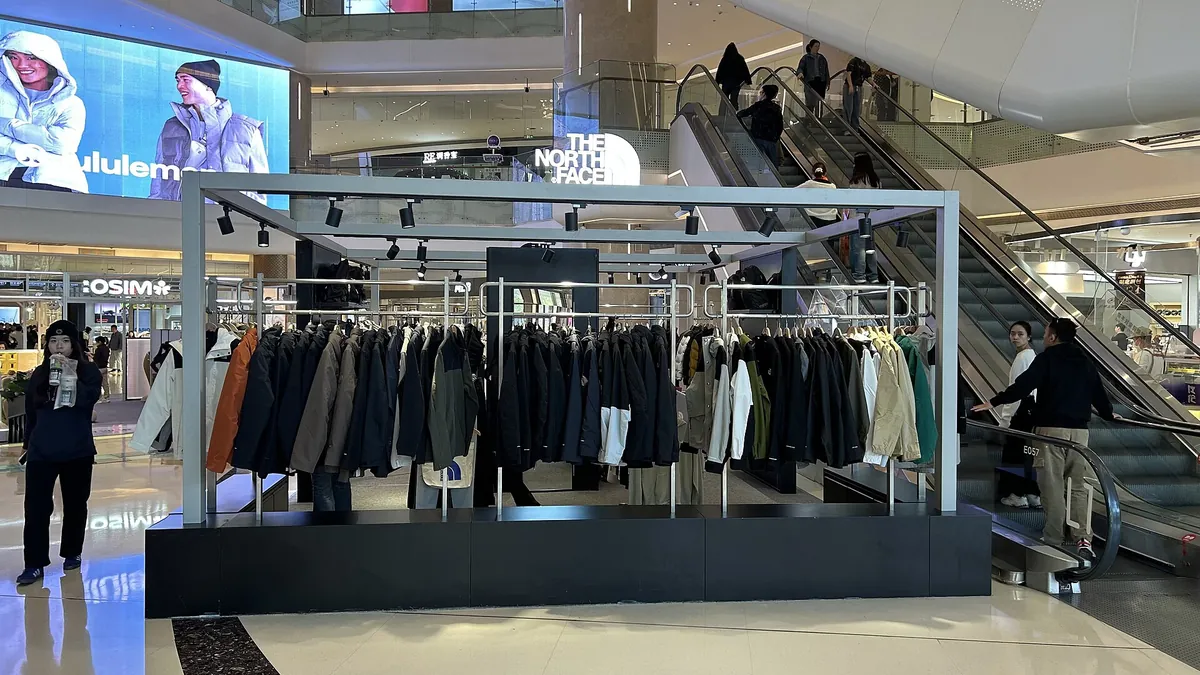
The setup relies on applications fed by robotics and item-level RFID tags, which are radio labels a reader picks up without a scan.
The shop carries selected products from VF brands including The North Face, Vans and Timberland. It operates autonomously with no staff on site during selected hours, a joint release says.
An AI assistant in a mobile app guides visitors from the door to checkout, SAP says. Shoppers use a smart mirror that recognises items to recommend products, while a station embroiders artwork generated from a sketch. The completed sale updates stock in SAP and can trigger a reorder.
The shop is not a public venue, SAP says. It is open to employees, families and arranged visits for partners. AI agents coordinate steps, while people maintain oversight of rules and exceptions.
Our reading for retail CIOs: an IT leader signs off store systems and the budget to change them. Here the vendor shows its software running an entire shop on its own campus. What the release leaves out: any published result on cost, time saved, error rates or a timeline for a public location. The decision on their desk is what evidence to demand before treating this as more than a showcase.
SAP and VF Corporation, the owner of The North Face, Vans and Timberland, run a test store at SAP's headquarters that works with no staff at some hours.
- The company
- VF Corporation owns The North Face, Vans and Timberland. Its products are sold in S.Fashion, a test store at SAP's headquarters in Walldorf, Germany. Only SAP staff, their friends and families, and invited customers and partners can visit.
- The SAP system
- SAP applications handle stock, orders, pricing, promotions and reordering, fed by a tag on every item (RFID, a radio label a reader picks up without a scan). Joule, SAP's AI assistant, runs inside the store's phone app.
- What the AI does
- Joule guides the shopper from the door to checkout. A fitting-room mirror recognises the item and suggests sizes and outfits. AI agents read what happens in the store and line up the next step, such as packing an order or reordering stock. People set the rules and handle exceptions.
- Result, as reported
- None yet. SAP and VF call it a live test. They say that during selected hours the store will run with no staff on site.
- What nobody has said yet
- No sales, visitor numbers, cost, time saved or error rates. No end date for the test, and no plan to bring the format to a VF store open to the public.
- Why it matters
- For a retail CIO, this is the first time SAP shows its AI running a whole store, from the shelf to the reorder. The proof a buyer needs, what it costs and what it saves, is still missing.
Sources
Our file on SAP
- 19 Nov
Microsoft's finance saves over 250,000 hours yearly with AI, it reports. It runs on SAP, though Microsoft sells ERP.
- 19 Nov
SAP customer Bestseller thought it had around 12,000 staff, it says. Its systems counted differently; the total was closer to 20,000.
- 19 Nov
SAP's AI for on-premises customers needs a cloud commitment, a user group chief says. Single-system firms must move all maintenance, he says.
- 18 Nov
Croatia's treasury wants SAP licence maintenance estimated at €410,540, a tender shows. Every bidder needs SAP's confirmation that it is authorised.
- 18 Nov
A Swiss hospital awarded SAP HR app work worth about CHF 64,000, a notice shows. Some HR work gets little digital help.
Every story here is open to read. The ERP LEADERS brief goes one step further.
Today's enterprise software news in one short email, each story with its source. Get the brief, free to join.
Welcome back. · Issue 01